Power & Engineering for a Cleaner Future.   •   Power & Engineering for a Cleaner Future.

IDEAS INTO PRACTICE

Better systems start with better questions.

Practical innovation begins with a real energy need and a willingness to keep improving the answer.

PRACTICAL CURIOSITY

Start with the real question.

Explore the thinking behind the solutions and the work Green Tech chooses to share.

EXPLORE THE IDEAS

From challenge to useful change.

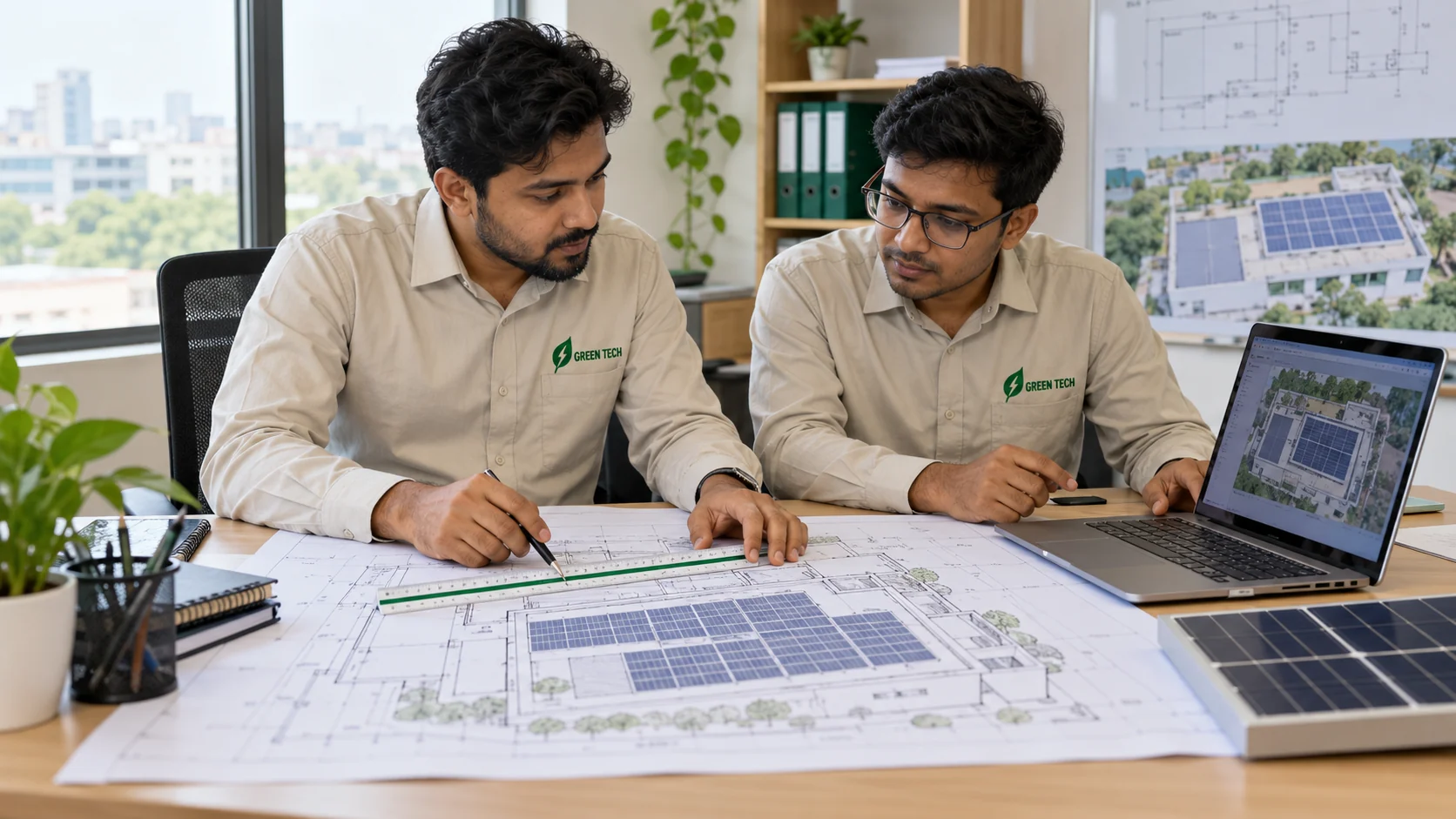
Two engineers comparing a rooftop solar layout with drawings and a laptop.

Solar system design

Solar design shaped around your site

THE CHALLENGE
Every site has different roof conditions, available space, and energy requirements. A standard layout may not suit the way the site is used.
THE APPROACH
We review the site and energy demand, then develop a panel layout and equipment selection around the project’s practical constraints.
THE BENEFIT
A clearer basis for installation, with system choices connected to the site’s needs and available space.
link text ↗ Explore related work ↗
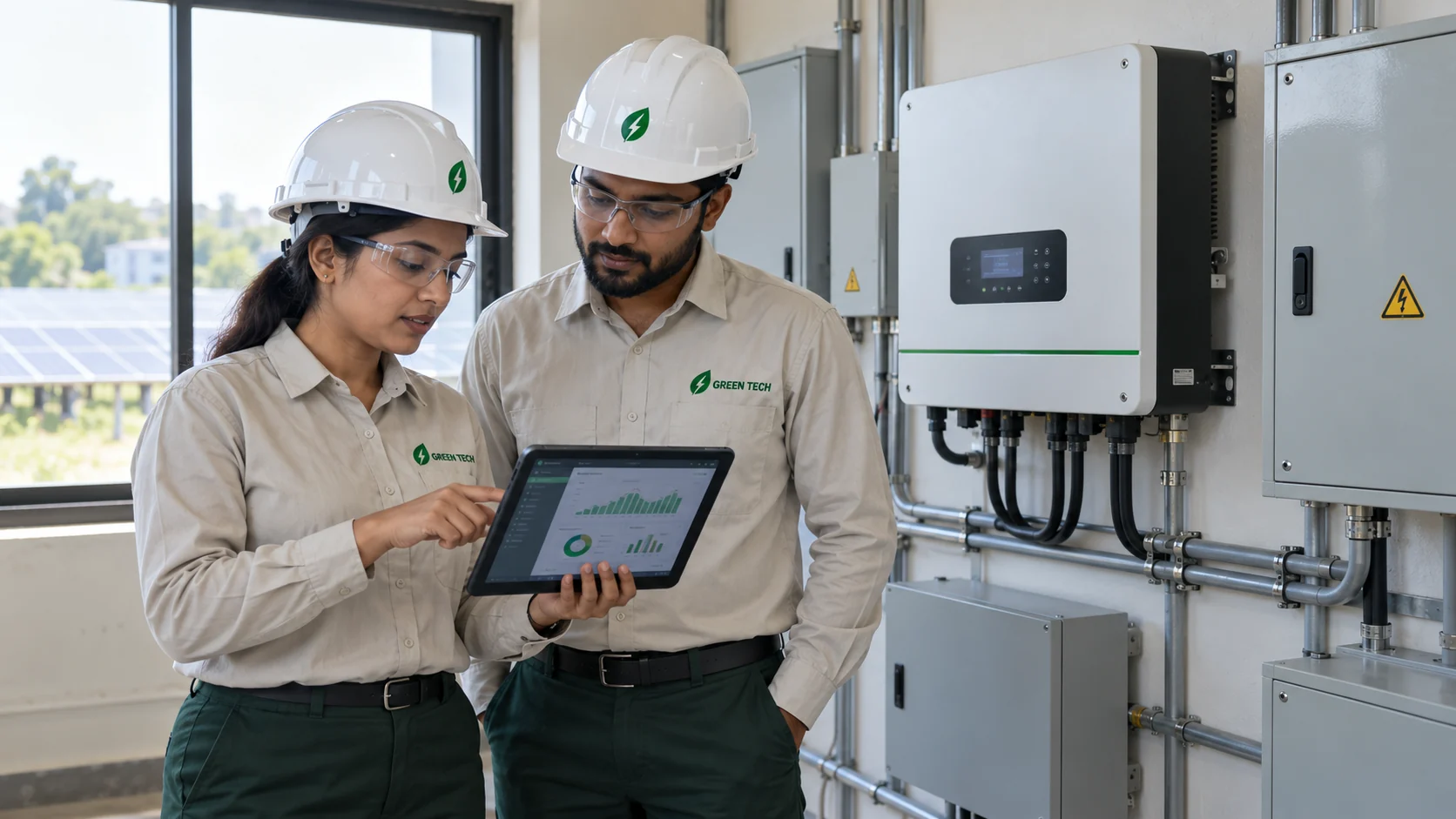
Two engineers reviewing monitoring information beside a solar inverter.

Energy monitoring

A clearer view of system performance

THE CHALLENGE
Changes in system output can be difficult to understand without accessible operating information.
THE APPROACH
We review available inverter and monitoring data to understand operating patterns and guide further checks.
THE BENEFIT
Better visibility into system operation and a more informed starting point for maintenance decisions.
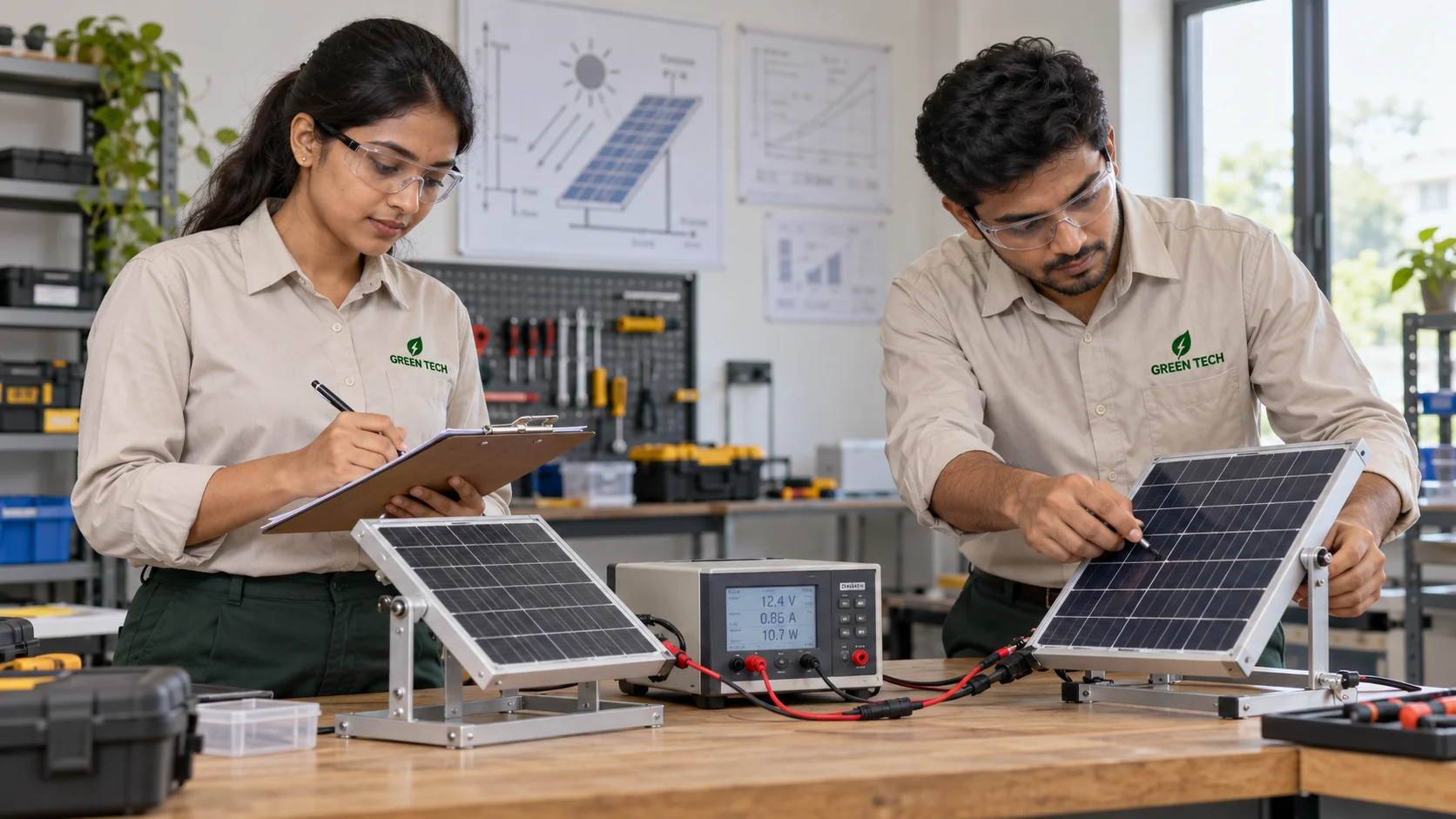
Engineers recording measurements while testing small solar panel samples.

Practical testing

Testing ideas before wider use

THE CHALLENGE
A promising design or component still needs to be checked against practical operating conditions.
THE APPROACH
We compare options through focused measurements and small-scale checks, using the findings to refine the proposed approach.
THE BENEFIT
More informed engineering decisions and opportunities to address practical issues before wider implementation.

THE METHOD

How an idea gets stronger.

01

Observe

Look closely at the energy need and its context.

02

Design

Explore a solution that fits the real constraints.

03

Test

Check the idea against evidence and practical use.

04

Improve

Use what was learned to make the next version better.